Who Owns the Conflict? A Utility Coordination Sequence for Rail Projects
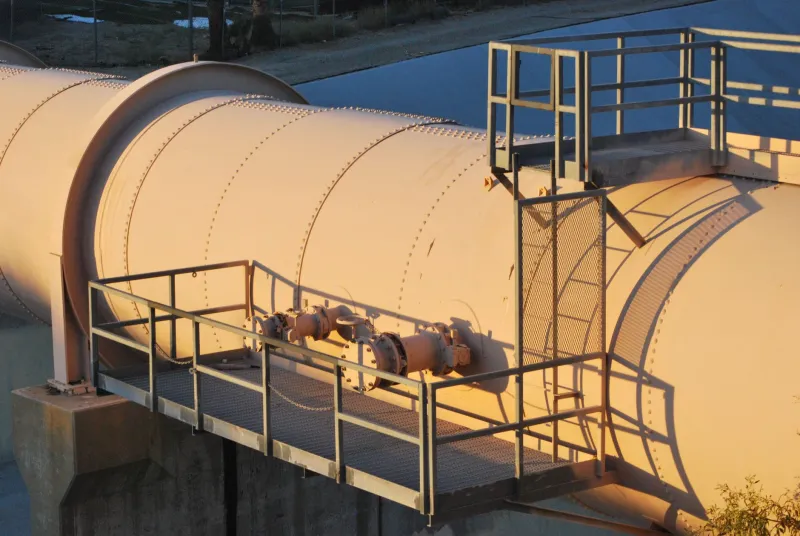
Utility conflicts are rarely a surprise in the abstract. Every rail project team knows that pipelines, fiber, power, and water lines cross the corridor. The surprise is the schedule. A relocation that was assumed to be a two-week permit item becomes a six-month design and agreement process, and the critical path moves from trackwork to a third-party owner's engineering department. The fix is not more optimism. It is a sequence that treats utility work as project work from the first field visit.
The Conflict Is Usually a Records Problem First
Utility records are a starting point, not a survey. Plans may be incomplete, out of date, or referenced to a coordinate system that does not match the corridor. The first task is to assemble a utility baseline: owner names, facility types, approximate locations, easement rights, and known relocation history. This baseline should be maintained as a live document, not a one-time deliverable.
For rail projects, the baseline should be organized by crossing and by parallel occupancy. A pipeline crossing at a bridge approach has a different risk profile from a fiber line running along the right-of-way. The project team should assign a utility coordinator with authority to contact owners, request records, and track responses.
Subsurface Investigation and the Utility Baseline
Records do not replace subsurface investigation. Test pits, vacuum excavation, and geophysical methods should be used to confirm the location and depth of critical utilities before design is fixed. The investigation should prioritize conflicts that affect track geometry, drainage, structures, and construction access. If a utility cannot be located, that uncertainty should be carried in the schedule and the risk register, not buried in an assumption.
The output should be a conflict matrix: utility owner, facility, location, conflict type, relocation required, responsible party, estimated duration, and status. The matrix becomes the basis for pricing and scheduling.
Relocation Agreements: Price, Responsibility, and Time
Relocation responsibility is often governed by easement language, franchise agreements, and state law. The project team should not assume that the rail owner pays or that the utility owner moves first. Each conflict needs an agreement that states scope, cost responsibility, schedule, access, and acceptance criteria.
Force-account work is common when the utility owner performs the relocation and the project reimburses actual cost. Force account can be appropriate, but it needs controls: labor rates, equipment rates, material markups, review thresholds, and a dispute process. Without those controls, the project is exposed to cost growth that is difficult to audit.
Force-Account Work and the Critical Path
The critical path test is simple: if this utility relocation slips, does track construction slip with it? If the answer is yes, the utility work needs the same level of design review, procurement, and schedule control as the rail work. That may mean early relocation, temporary supports, or a design change that avoids the conflict entirely.
Avoidance is often cheaper than relocation. A drainage structure can be shifted. A signal foundation can be moved. A construction access road can be rerouted. The project team should evaluate avoidance before committing to a relocation agreement, especially for high-pressure pipelines and high-capacity fiber.
A Practical Sequence From Concept to Construction
A defensible sequence looks like this. First, identify and map utilities during concept development. Second, confirm critical conflicts with subsurface investigation. Third, notify owners and request records. Fourth, negotiate relocation agreements and cost responsibility. Fifth, complete utility design and permits. Sixth, schedule relocations with construction, including outages and tie-ins. Seventh, verify as-built locations before trackwork closes out.
Each step should have a deliverable and a date. The utility coordinator should report status in the same weekly meeting as trackwork, not in a separate sidebar. When a utility relocation is on the critical path, it belongs on the master schedule.
Protecting the Schedule After the Agreement
Agreements are not the end of the risk. Utility owners have their own capital cycles, outage windows, and contractor availability. The project team should confirm outage requests early, build float into the schedule, and maintain a contingency for force-account work. As-built records should be collected and turned over to the rail owner for future maintenance.
The lesson is not that every utility conflict can be eliminated. It is that utility work can be sequenced before it becomes a crisis. For rail projects, the corridor is a shared space. The project team that treats third-party utilities as part of the construction sequence, rather than an administrative obstacle, is the one that keeps the critical path where it belongs.