The Fouling Curve: Making the Case for Ballast Cleaning Before the Next Overlay
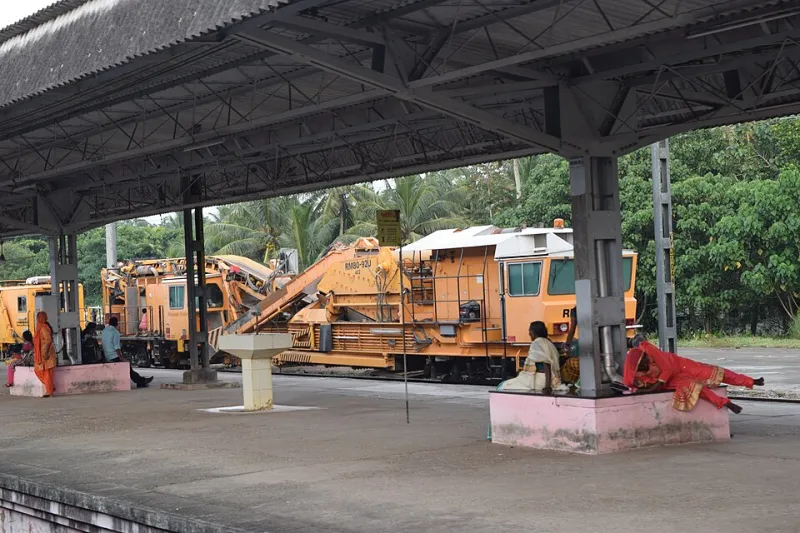
Photo: KannanVM, CC BY-SA 4.0, via Wikimedia Commons
Ballast is often treated as the part of the track that is already there. That framing is expensive. In a track structure, ballast is a working component with a duty cycle: it drains water, distributes load, holds the tie in place, and can be renewed. When it fouls, it stops doing those jobs quietly, and the cost shows up later as surfacing frequency, drainage failures, and geometry that will not hold.
Ballast Is a Consumable With a Duty Cycle
Fouling is the accumulation of fines, dust, spilled lading, and broken aggregate within the ballast voids. Some of it is expected. The problem is the rate. A corridor that is cleaning ballast every eight to ten years is managing a consumable. A corridor that is overlaying stone every three years without addressing the fines is treating a consumable as a foundation. The distinction matters for lifecycle cost, because the two strategies produce very different maintenance curves.
What Fouling Does to Track Modulus and Drainage
Clean ballast has interconnected voids. Water moves through it, and the aggregate interlocks to provide lateral resistance. As voids fill, the ballast becomes denser and less permeable. Track modulus can rise, which sounds beneficial until it becomes uneven. A stiff, poorly draining section next to a softer section creates transition stresses at the joints, bridge approaches, and turnouts. Water that cannot drain through the ballast reaches the subgrade, softens it, and accelerates the cycle.
The operational symptoms are familiar: pumping ties, mud spots, center-bound ballast, and surfacing that does not last. In winter, saturated ballast freezes and heaves. In summer, it may not provide the lateral resistance assumed in the continuous welded rail plan. Fouling is therefore not only a maintenance issue. It is a structural and thermal-risk issue.
Three Strategies, Three Different Lifecycle Curves
Owners generally have three options: cleaning, undercutting, and overlay.
Cleaning removes fines from the ballast in place, typically with a ballast cleaner that excavates, screens, and returns stone. It is best where the ballast is contaminated but the aggregate still has shape and strength. It preserves the profile and can be scheduled in shorter possessions.
Undercutting removes the entire ballast section under the ties, replaces it with clean stone, and restores the profile. It is more disruptive and more expensive, but it is the right choice where fouling extends deep, where the ballast is badly degraded, or where the subgrade needs attention.
Overlay adds clean stone on top. It is fast and can improve profile and drainage temporarily, but it does not remove fines from the load-bearing zone. If used repeatedly without cleaning, overlay can raise the track and leave a contaminated layer beneath.
The lifecycle comparison should not be a single bid price. It should include possession cost, train delay, surfacing frequency, drainage repairs, and the expected interval to the next intervention. In many cases, cleaning costs more than a light overlay on day one and less over a ten-year window.
Specifications That Protect the Investment
A ballast cleaning specification should define the depth of excavation, the acceptance criteria for returned stone, the amount of new stone, the profile tolerances, and the disposal plan for fines. It should also require pre- and post-work sampling. If the specification only says clean ballast, the owner is buying a process, not a result.
Material specifications matter as well. New stone should meet the owner's ballast standard for gradation, durability, and abrasion resistance. Mixing a high-quality stone with a contaminated section can shorten the life of both. For government owners, the specification should align with the agency's standard specifications and any freight railroad requirements for the corridor.
Recycling and the Material Balance
Ballast cleaning produces a fines stream and, depending on the process, surplus stone. Recycling options include using screened stone in less demanding applications, such as shoulders or access roads, and disposing of fines in permitted facilities. The material balance should be part of the bid documents. Haul distance and disposal cost can change the economics of cleaning versus overlay, especially in urban corridors where landfill capacity is tight.
Justifying the Spend to a Government or Industrial Owner
The strongest case for cleaning is a corridor-level one. Map fouling depth, drainage defects, and surfacing history. Compare the cost of a cleaning program with the cost of continued overlays and emergency repairs. Then present the difference in train delay and possession hours. For industrial owners, the same logic applies to private sidings and plant track, where a failed drainage section can stop inbound loads.
In 2026, owners are also facing higher stone costs and tighter possession windows. That makes the consumable framing more useful, not less. Ballast is not a foundation that can be ignored once it is built. It is a renewable layer that deserves a renewal plan.