The Ground Beneath the Loading Dock: Picking Pavement That Survives Your Heaviest Trucks
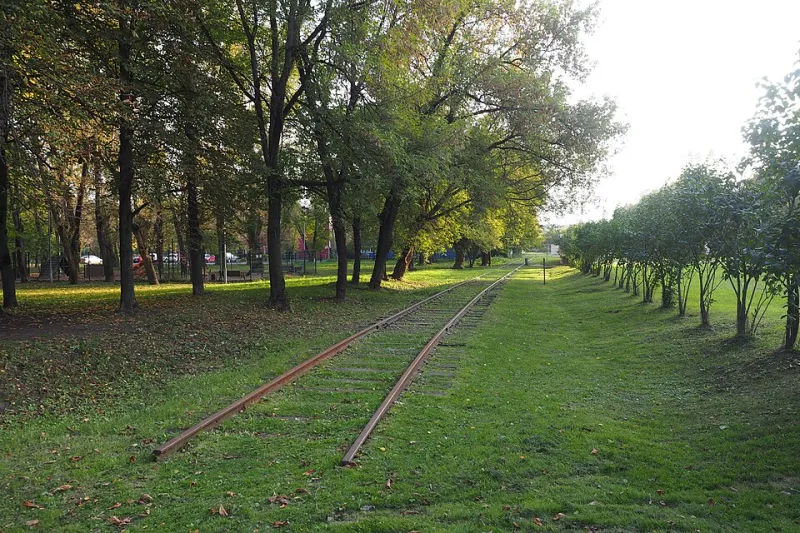
Photo: Artyom Svetlov, CC BY-SA 4.0, via Wikimedia Commons
Every industrial site has one corridor that takes a beating no other surface on the property ever sees. It might be the run from the rail spur to the loading dock, the access road serving a scrap yard, or the turning path where 80,000-pound tankers pivot daily. Choose the wrong surface for that corridor and the site pays for the mistake in patches, potholes, and downtime for decades.
The three candidates most American facility designers weigh — ballasted track panel, concrete slab track, and reinforced pavement — are rarely compared on equal terms. Sales literature favors one or another. What follows is a neutral accounting, grounded in what we see when we're called in to fix somebody else's decision.
Three Surfaces, Three Philosophies
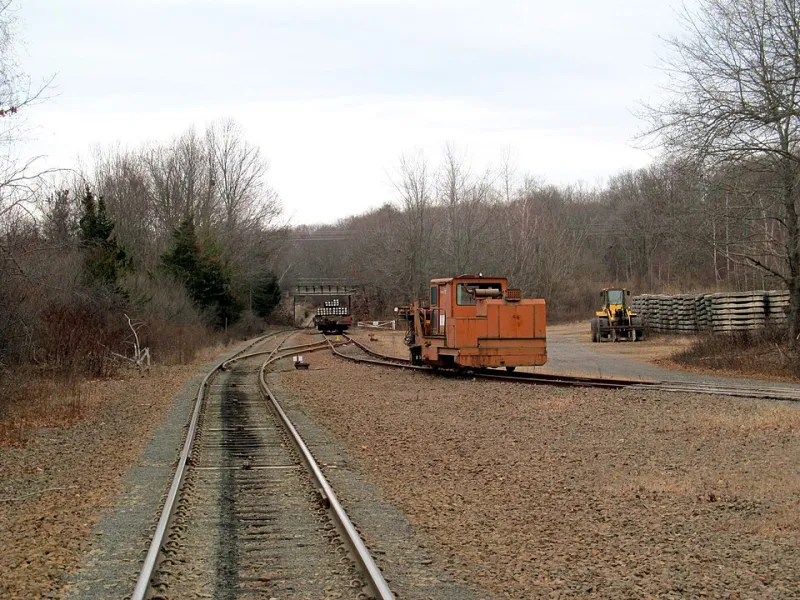
Ballasted track panel is the traditional choice: stone ballast, ties, rail, and a well-drained subgrade. It flexes under load, sheds water, and repairs itself in the sense that individual components can be swapped without closing the whole corridor. Its weakness is geometry — it needs depth, drainage, and room to settle, and it resists nothing that rolls outside the rail line.
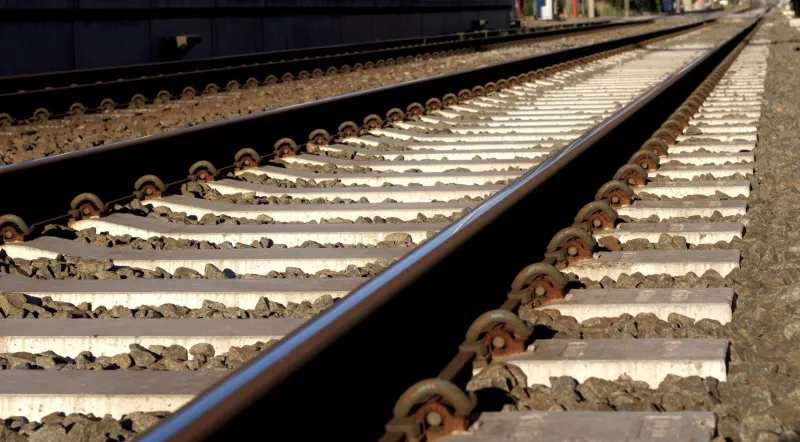
Slab track replaces ballast with a continuous reinforced concrete slab supporting the rail directly. It holds tight tolerances, demands almost nothing in routine maintenance, and shrugs off the rubber-tired traffic that chews up everything else. The trade is brutal upfront cost and an unforgiving attitude toward subgrade failure — fix the slab and you're sawing concrete, not tamping stone.
Reinforced pavement — heavy-duty concrete or asphalt pavement with dowel joints and substantial steel — handles rubber-tired loads superbly and integrates with dock aprons and yard roads. Where rail is involved, it typically means embedded or flush rail, which is elegant for crossings and dock areas but expensive per linear foot and miserable to maintain once settlement cracks appear around the rail flangeway.
Cost per Axle, Not Cost per Square Yard
The mistake most facility budgets make is comparing bids per square yard. The honest metric is cost per axle passing over the corridor over its service life.
A rough rule of thumb from our project files: ballasted panel runs lowest upfront — often 40 to 60 percent of slab track cost — but accumulates surfacing, tamping, and drainage maintenance that can exceed the initial savings within fifteen years on high-tonnage corridors. Slab track carries the highest first cost but the flattest lifecycle curve. Reinforced pavement sits between them for pure truck traffic but climbs quickly once embedded rail and flangeway details enter the picture.
For a corridor seeing fewer than 50 heavy axles a day, ballast with disciplined maintenance usually wins. Above that — think intermodal terminals, steel mills, big-box distribution — slab track's lifecycle math starts to dominate, and the break-even point arrives sooner than most capital plans assume.
A Decision Matrix for Site Engineers
Score each candidate 1–5 on five factors, weighted to your operation:
- Axle frequency — High daily tonnage favors slab; light and intermittent loads favor ballast.
- Mixed traffic — Forklifts, trucks, and pedestrians sharing the corridor favor pavement or flush rail; rail-only corridors favor ballast or slab.
- Subgrade quality — Poor soils punish slab track hardest; ballast tolerates what deep pavement sections cannot.
- Drainage and climate — Freeze-thaw states (the I-80 corridor and north) demand exceptional drainage under any surface, but ballast recovers from frost heave that cracks slab.
- Maintenance appetite — A plant with no track department should not own ballast. It will not be maintained.
The Verdict Most Sites Reach
In practice, the best American industrial sites don't choose one surface — they zone them. Slab track or embedded rail at the dock and the crossing, ballasted panel on the long runs where equipment can work, and reinforced pavement on the truck aprons. The seams between zones are where failures start, so detail the transitions with the same rigor as the surfaces themselves.
Budget honestly for the substructure, match the surface to the axle count, and the heaviest corridor on your site will be the cheapest part of the plant to own — not the most expensive thing you forgot about.