Fifty-Two Hours, One Mile: Anatomy of a Weekend Mainline Rebuild
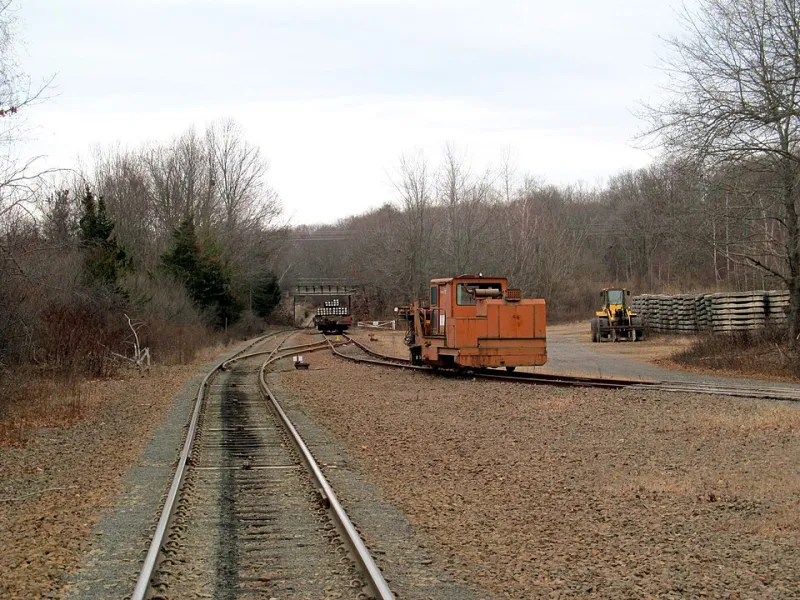
Photo: Pi.1415926535, CC BY-SA 3.0, via Wikimedia Commons
At 10:00 PM Friday, the signals drop and the block goes dark. By 6:00 AM Monday, trains are rolling over a mile of brand-new mainline track. In between lies one of the most demanding exercises in American construction: the weekend possession sprint.
For clients outside the rail industry, the idea of rebuilding a mile of heavy freight track in a single weekend sounds like bravado. In practice, it is the product of weeks of planning compressed into hours of execution — and it is becoming the preferred delivery model for railroads and industrial clients who cannot afford extended service disruptions.
Why the Weekend Possession Exists
A mile of mainline under continuous construction might take a conventional crew four to six working weeks, with the corridor partially out of service the entire time. Every additional day of restricted operating capacity carries a real cost: rerouted trains, reduced train lengths, slower timetable speeds, and downstream congestion across the subdivision.
The possession model flips that equation. Rather than spreading disruption across a month, the railroad accepts one concentrated outage — typically 52 to 60 hours over a weekend — and the contractor commits to returning the track to FRA Class 4 operating condition before the Monday morning rush of manifest freight.
The economics favor compression. Track time is the scarcest commodity on a busy corridor, and weekend windows, while expensive in overtime labor and equipment mobilization, are frequently cheaper than weeks of degraded capacity on a line moving 60 or more trains a day.
The Work Begins Long Before Friday Night
The single most common misconception about a possession sprint is that the work happens during the weekend. In reality, the weekend is where planning either pays off or collapses.
Two to three weeks out, our project engineers finalize the work sequence down to fifteen-minute increments. Surfacers, tampers, and regulators are positioned at nearby sidings. New rail is pre-welded into strings and staged on adjacent trackage. Ballast trains are loaded and spotted. Every machine has an assigned entry point, a work zone, and an exit route — because a 200-ton tamper stuck behind a ballast train is an hour of possession lost forever.
Permits, flagging assignments, employee-in-charge designations, and on-track safety briefings are locked in advance. Weather contingencies are written into the plan: a defined trigger point at which the crew pivots from full-depth surfacing to a reduced scope that still guarantees a safe, serviceable mainline by Monday.
The Friday Night Tear-Out
The possession opens with the least glamorous but most consequential phase: demolition and removal. MoW equipment — typically a pair of large excavators fitted with rail wheels, supported by grapple machines and dump trains — lifts old rail, pulls tie fields, and excavates degraded ballast and fouled subgrade material.
On a recent midwestern Class I subdivision rebuild, our crew removed approximately 2,900 ties, eleven rail strings, and 1,400 cubic yards of spent ballast in the first eight hours. Speed matters here, but sequence matters more. Removal must move continuously in one direction so that the rebuild phase — which follows immediately behind — is never starved for a clean work platform.
The Rebuild: A Moving Assembly Line
By Saturday morning, the corridor transforms into a linear factory. New ballast is dumped and spread by regulator. Tie-laying equipment places new concrete or hardwood ties on programmed spacing. Rail strings are laid, anchored, and joined. Then the finishing trades take over: ballast trains distribute stone, and the tamper and regulator pass repeatedly, lifting, lining, and compacting the track to precise geometry.
Crew rotation is the quiet discipline that makes this sustainable. A 52-hour possession is worked in overlapping shifts — typically two twelve-hour production shifts with a supervisor overlap, plus a mechanical maintenance team servicing equipment on the fly. Hydraulic systems on tampers fail at the worst possible moment; a dedicated mechanic on each shift is not a luxury, it is schedule insurance.
Meals, fuel, and relief logistics are staged trackside. Nothing about the operation is improvised, because nothing can afford to be.
Contingency: Planning for the Plan to Fail
Every possession plan carries a decision tree. If a ballast train derails on the approach, if a storm cell parks over the work zone, if the tamper goes down with a broken chain — the project engineer has pre-defined fallback scopes for each scenario, each preserving the non-negotiable outcome: a safe mainline returned to service Monday morning.
That may mean accepting a temporary speed restriction on one segment, or deferring a second surfacing pass to a future maintenance window. The discipline lies in deciding these trade-offs in advance, in a conference room, rather than at 3:00 AM Sunday on the right-of-way.
Why Compression Improves Quality
Counterintuitively, the tightest windows often produce the best track. Open-ended schedules invite drift: crews waiting on material, equipment idling, sequencing decisions made informally day to day. A possession sprint eliminates that slack. Every activity is sequenced, every resource is committed, and every quality checkpoint — from tie spacing tolerance to final crosslevel measurements recorded by the tamper's onboard geometry systems — is verified in real time against the clock.
There is also a human factor. Crews working a defined sprint with a hard finish tend to be sharper and more focused than crews spread across weeks of intermittent access. The deadline is shared, visible, and absolute.
The Takeaway for Shippers and Operators
For industrial operators evaluating plant rail access, or agencies planning corridor upgrades, the possession sprint model deserves attention. It demonstrates that with disciplined pre-planning, rail construction can be scheduled around your operation rather than through it.
The mile of track is new by Monday. The planning that made it possible started months earlier — and that is where the real engineering happens.