Steam-Era Steel, Modern Tonnage: Rethinking the Rail Bridge Replacement Cycle
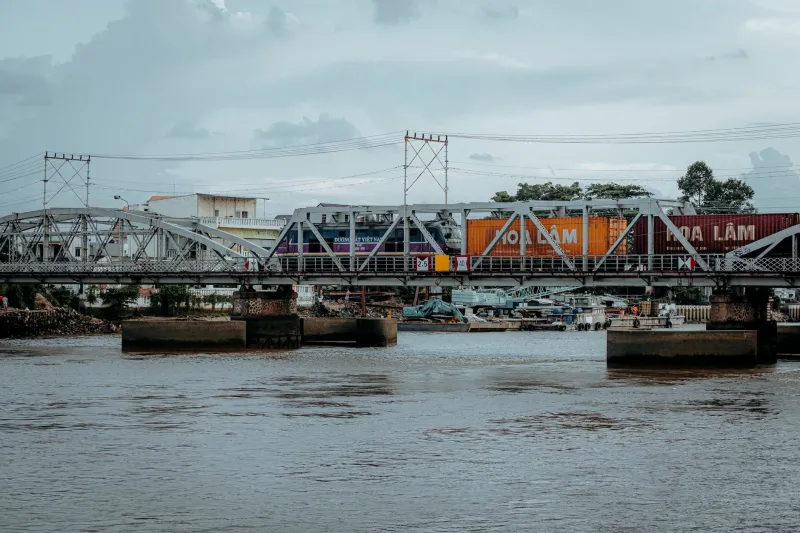
Somewhere beneath every freight car rolling across the American rail network is a structure designed by an engineer who never heard of a 286,000-pound car. That is not an exaggeration for effect. The majority of the more than 100,000 bridges in the US freight rail system were built in the first half of the twentieth century, when a Cooper E-60 loading was a conservative design assumption and the heaviest rolling stock was a fraction of today's tonnage. Those structures have performed admirably — many are still among the most reliable assets on the network — but the arithmetic of accumulated fatigue, corrosion, and load escalation does not negotiate.
The industry's informal answer has been an 80-year replacement rhythm: build, patch, patch again, and replace roughly two generations after the first spike. For owners planning capital programs, the question worth asking is whether that rhythm is an engineering reality or simply a habit inherited from how past generations funded their infrastructure.
Why the Cycle Exists at All
The 80-year figure is less a specification than the byproduct of three forces aligning. First, rail bridges are built to outlast nearly everything else on the right-of-way; a well-maintained steel through-truss or concrete girder span can serve far longer than its design life if loads stay within assumptions. Second, deferred maintenance is rational in the short run — a bridge that passes inspection today rarely justifies replacement in today's budget cycle. Third, replacement is disruptive in ways that track renewal is not. A rail crossing a river cannot be easily rerouted, and possession windows over a major waterway are expensive, contested, and brief.
The result is a funding logic in which rehabilitation is always cheaper than replacement — right up until the year it isn't. Bridge engineers describe a familiar inflection point: the third or fourth major rehabilitation, when the cumulative cost of deck repairs, bearing replacement, substructure work, and traffic staging begins to approach the cost of a new structure. At that point, the rational decision flips. Owners who plan for that flip in advance buy the asset decades of additional service at predictable cost. Owners who discover it mid-program pay a premium for urgency.
What Inspection Technology Has Changed
The most significant development in bridge lifecycle economics is not a construction method but a diagnostic one. Modern inspection regimes — combining conventional hands-on examination with acoustic monitoring, ultrasonic thickness testing, drone-based visual surveys, and increasingly sophisticated structural health monitoring — give owners something their predecessors never had: a quantified rate of deterioration.
Where a 1970s bridge report might have read "section loss noted at lower chord members, monitor," a current assessment can project remaining useful life by member, correlate fatigue accumulation against recorded tonnage, and model how a planned increase in car weight will accelerate specific failure modes. That transforms the replacement decision from a judgment call into a capital planning exercise. A bridge owner can now rank a portfolio of structures by risk-adjusted cost per year of additional service, and sequence replacements to match traffic patterns, funding availability, and shipper commitments.
For Class I railroads, this discipline is increasingly institutionalized. For short lines, industrial track owners, and public agencies with rail assets, it remains the exception rather than the rule — which is precisely where the opportunity lies.
Accelerated Construction: Compressing the Disruption Premium
The second lever is construction methodology. Historically, the disruption cost of bridge replacement — the falsework, the river work, the temporary shoo-fly track, the months of reduced operating capacity — was treated as fixed. It is not.
Precast concrete deck panel systems, self-propelled modular transporters for span installation, and prefabricated superstructure assemblies have all matured considerably. A deck replacement that once required a multi-week possession can now, on suitable structures, be executed across a series of weekend windows, with factory-cast panels installed overnight and grouted into service before Monday's traffic. Full span replacements on secondary lines are increasingly rolled in during a single 48-hour window.
The economics are straightforward: construction labor and materials scale roughly linearly with scope, but disruption costs scale with time. Every day removed from a possession window is a day of freight capacity returned to the network. When shippers are factoring route reliability into their logistics contracts, that recovered time has measurable value — and it increasingly justifies premium construction methods that would have seemed extravagant a generation ago.
What Shippers Should Ask
Freight shippers rarely think about the structures beneath their cargo until a speed restriction or weight limit appears on their lane. But bridge condition is a legitimate logistics variable, and sophisticated shippers are beginning to treat it as such. Three questions are worth asking any carrier or industrial track owner:
- When was the last comprehensive inspection, and does it reflect current car weights rather than historical assumptions?
- Is there a documented capital plan for major structures, or is replacement being improvised?
- How would a bridge outage be routed around, and what would that do to transit time and cost?
None of these questions implies distrust. They imply that the shipper understands the network it depends on is a portfolio of aging assets, some of which are approaching the end of their economic lives.
Breaking the Cycle
The 80-year replacement rhythm will not disappear, and there is nothing inherently wrong with long-lived infrastructure — it is a hallmark of rail's engineering discipline. But the cycle can be managed rather than endured. Owners who pair modern diagnostics with accelerated construction methods can convert an unpredictable, crisis-driven replacement problem into a sequenced, decades-long capital program executed on the owner's terms.
That is the difference between a bridge program that happens to you and one you conduct. The structures beneath the freight network were built by engineers who planned for loads they could not fully foresee. The least we can do is plan for their replacement with the same rigor.