What Highway Procurement Officials Should Steal From Rail Construction Discipline
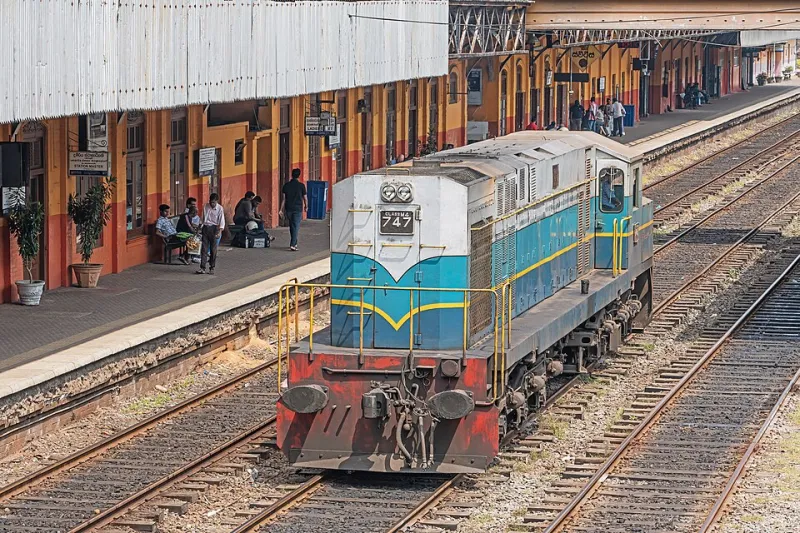
Photo: A.Savin, FAL, via Wikimedia Commons
Spend a week on a rail construction site and then a week on a highway paving job, and the cultural difference becomes obvious. Rail work is governed by tolerances measured in fractions of an inch and schedules measured in hours of track availability. Highway work enjoys shoulders — literally and figuratively. This is not a critique of highway contractors; it is an observation about what happens when an industry's operating constraints force a particular kind of discipline. And it is an argument that public procurement officials, who must compare contractors across sectors, should understand what that discipline is worth.
Lesson One: Design to a Tolerance, Not an Impression
Track geometry standards specify allowable deviation for surface, alignment, gauge, and cross-level with numerical precision, and deviations are measured, logged, and corrected against those numbers. A loaded coal car does not forgive an eighth-inch of carelessness at 60 miles per hour.
Contrast this with the looser conventions that can govern roadwork, where ride quality is sometimes assessed after the fact rather than engineered in from the subgrade up. Agencies writing performance specifications for pavement projects could borrow the rail model directly: define measurable geometric acceptance criteria before the contract is signed, tie payment to them, and the ambiguity that breeds change orders largely evaporates.
Lesson Two: The Possession Window as a Contract Instrument
Rail construction's defining constraint is the possession — a defined block of time, often a single weekend or a nightly eight-hour window, during which track is available. Everything must fit inside it: mobilization, demolition, installation, testing, and restoration of service. There is no partial credit for running long.
This forces a planning culture that many sectors would benefit from imitating. Work is broken into preassembled, pre-staged components — panelized track, precast units, pre-wired signal cases — so that field time is spent installing, not fabricating. A contractor that reliably delivers a complex interlocking renewal inside a 52-hour weekend possession has demonstrated something a resume cannot: repeatable, verifiable schedule execution. Procurement officials evaluating bids for time-critical highway work — bridge deck replacements over live traffic, for instance — should weight demonstrated possession-window performance heavily. Ask for the record. Ask how many windows were missed and why.
Lesson Three: Plan the Interface, Not Just the Asset
Rail projects routinely involve multiple jurisdictions — the operating railroad, the transit agency, the utility, the municipality — each with veto power over access. Contractors who survive in this environment become experts at interface management: sequenced approvals, documented access agreements, and communication protocols that keep flaggers, dispatchers, and inspectors synchronized.
Highway megaprojects fail for the same reasons rail projects would: unmanaged interfaces between parties who each assume someone else has the schedule covered. A procurement process that requires bidders to submit an interface management plan — not just a CPM schedule — imports rail's hard-earned rigor at negligible cost.
Lesson Four: Test Before You Cut Over
No railroad accepts a new signal system or realigned track without a defined testing regime and a formal cutover plan. The operating network simply cannot absorb an untested failure. Highway construction, by contrast, sometimes discovers its defects through public use. Adopting rail-style staged commissioning — dry runs, witnessed testing, and contingency cutover plans — for roadway systems like intelligent traffic management, lighting, and drainage would shift defect discovery from the traveling public to the contractor's own crew.
Lesson Five: Price the Risk You Can Name
Rail estimators work in an environment where track time is scarce and expensive, so risk is quantified rather than vaguely absorbed. Contingencies are attached to named uncertainties — weather windows, material lead times, access constraints — instead of a flat percentage. Agencies that require this style of risk-register-based pricing in bids get proposals that reveal how a contractor actually thinks, not just how cheaply it can quote.
The Lesson Rail Can't Teach
For all this, one thing rail construction cannot offer highway agencies is a template for decades-long pavement performance under free public access. Railroads control their right-of-way, control their loading, and control their maintenance regime. A highway belongs to everyone, including the overloaded truck and the driver in the storm. No tolerance regime fixes that. The honest conclusion for procurement officials is not that rail discipline is superior, but that it is transferable — in measurement, in scheduling, in interface control — while the underlying operating environments remain fundamentally different.
The best heavy civil contractors increasingly work across both worlds. Agencies that recognize rail-honed discipline for what it is — a proxy for execution reliability — will select better partners and get better roads.