The Aging Spur Audit: A Field Checklist for Private Track Owners Weighing Repair Against Rebuild

Photo by Photo by Nick Fewings on Unsplash on Unsplash
For plant managers and logistics directors, the private spur is easy to overlook. It sits at the edge of the property, sees a handful of car movements a week, and generates no revenue on its own. But an aging spur is not a dormant asset — it is a liability that compounds quietly until an FRA-reported incident, a customer embargo, or a connecting railroad's inspection forces the issue.
Why Spur Condition Deteriorates Faster Than Owners Expect
Industrial track lives a harder life than mainline rail. Cars are spotted, loaded, and pulled at low speed but high tonnage, often over subgrades never engineered for modern 286,000-pound loading. Decades of deferred drainage maintenance, vegetation growth, and repeated loading cycles leave many sidings structurally obsolete even when they look serviceable from a pickup truck window.
Five Warning Signs That Demand a Professional Inspection
1. Surface and cross-level defects you can feel. If locomotives or trackmobiles visibly rock or dip along the spur, the track structure has already lost geometry. What begins as a rough ride accelerates into broken ties and shifted ballast.
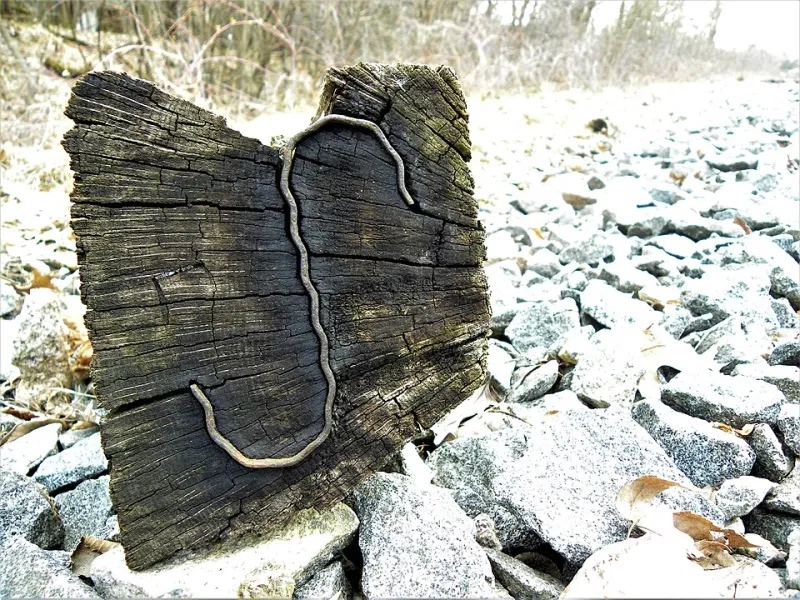
2. Tie degradation beyond spot replacement. Pull back vegetation at the tie ends. Split, plate-cut, or hollow-sounding ties — particularly when more than a quarter of ties in any stretch show wear — indicate the tie population has passed the point where piecemeal repair is economical.
3. Gauge widening and plate cutting. Measure gauge at several points. Readings drifting toward the upper end of allowable tolerance, combined with rail plates cutting into tie wood, signal that the fastening system and tie integrity are failing together.
4. Substandard or worn turnouts. Switch stands with degraded throw mechanisms, missing braces, or turnouts built to lighter standards than current car weights require are among the most common derailment points on industrial trackage. A turnout is a precision machine; when it wears out, it rarely wears out gracefully.
5. Water where it shouldn't be. Standing water in the track structure, ballast pumping mud under load, or a ditch that hasn't seen maintenance in a decade — poor drainage is the single strongest predictor of subgrade failure and escalating repair costs.
The Budgeting Question: Repair, Rehabilitate, or Rebuild?
Once deficiencies are documented, the decision framework is straightforward, even if the numbers vary by site.
Targeted repair — spot tie replacement, surfacing, and switch component renewal — makes sense when subgrade and drainage are sound and less than roughly 30% of ties are defective. Owners should expect costs in the range of tens of thousands of dollars for a typical 1,000-foot spur, depending on geography and access.
Rehabilitation — full tie renewal, rail replacement in kind, ballast cleaning, and turnout rebuild — suits track with sound alignment and drainage but exhausted components. Budgets for this scope commonly run several hundred thousand dollars on shorter sidings, driven heavily by turnout count and mobilization.
Full reconstruction — new subgrade preparation, drainage, ties, rail, ballast, and turnouts engineered to current 286,000-pound standards — is warranted when the subgrade itself has failed or the track must handle heavier cars or a new switch connection. Costs can exceed $300 to $500 per foot in many markets, but the result is an asset with a 30-to-40-year service life and far lower annual maintenance exposure.
The Cost of Deferral
Compare these figures against the alternatives: a single minor derailment on private property routinely produces six-figure cleanup and car-repair bills, plus service disruption. Many connecting carriers now require private track inspections under their industry standards, and a failing spur can result in embargoes that strand traffic entirely.
The disciplined approach is an annual documented inspection, a five-year capital plan for the track asset, and a willingness to treat the spur like any other piece of plant infrastructure — because that is exactly what it is. Rail Construction Co. works with facility owners across the country to turn aging sidings from open liabilities into dependable, specification-compliant assets.