Getting Off the Level Crossing: Inside America's Grade Separation Build-Out

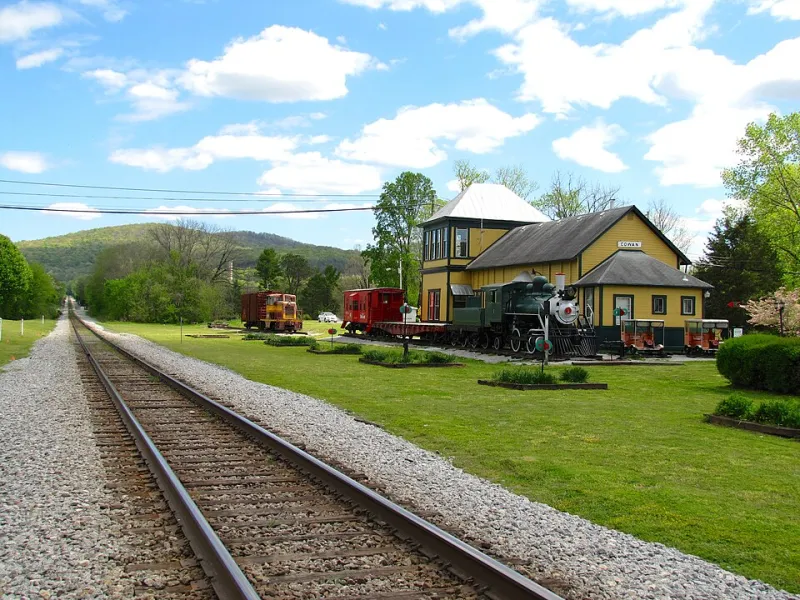
Photo by Photo by Roger Starnes Sr on Unsplash on Unsplash
Every railroad grade crossing is a negotiation between two systems that were never designed to share space. As train frequency and vehicular traffic both climb, that negotiation increasingly ends the same way: one party gets elevated, the other gets buried, and the intersection disappears entirely.
Across the United States, grade separation has shifted from an occasional megaproject to a steady pipeline of work. California's high-speed rail program alone requires dozens of separations in the Central Valley. Commuter authorities in Illinois continue working through the Chicago region's notorious crossing inventory, while freight carriers and state DOTs from Texas to Washington are funding overpasses and underpasses at chokepoints that once produced daily delay claims and, too often, collision reports.
Why the Money Is Moving Now
Federal programs have fundamentally altered the funding calculus. The Bipartisan Infrastructure Law's Railroad Crossing Elimination program, along with CRISI grants and state-level safety initiatives, has put dedicated dollars behind projects that municipalities historically could not afford on their own. A single separation — combining civil works, drainage, signaling, and track construction — routinely runs from $30 million to well over $100 million in constrained urban settings.
The economic case, however, extends beyond safety statistics. Communities lose measurable productivity to blocked crossings: idling trucks, delayed emergency response, and horn noise that suppresses adjacent property values. For railroads, a sealed corridor reduces the risk profile that comes with every public interaction. Both sides have strong incentives; the federal programs simply supply the missing capital.
Building Across Live Track
What makes grade separation genuinely difficult is not the structure itself — highway contractors build overpasses constantly. The difficulty is the railroad underneath or above, which typically cannot stop running.
Underpass construction on an active freight mainline demands temporary shoring systems — often driven sheet pile or soldier pile and lagging walls — installed within narrow work windows between trains. Where conditions allow, contractors deploy precast concrete grade crossing panels and shoofly track alignments to divert trains onto temporary trackage while the permanent structure takes shape. Every hour of track time must be negotiated, planned, and executed with almost surgical discipline.
Overpasses invert the problem. Erecting bridge spans over electrified or high-tonnage territory may require multi-day possessions, crane lifts sequenced to the minute, and overhead protection platforms that shield passing trains from falling debris. In signal-dense corridors, even the structure's proximity to track centers triggers interlocking modifications and testing protocols that must be coordinated with the railroad's engineering staff months in advance.
Drainage deserves particular attention in underpass design. A depressed roadway sits at the lowest point of the local watershed, and pump stations, backup power, and maintenance access are not optional extras — they are the difference between a structure that serves for 75 years and one that floods every spring storm.
What Municipal Clients Should Expect
For city engineers and county officials entering their first separation project, three realities matter most.
First, utility relocation is frequently the longest pole in the tent. Fiber, gas mains, and water lines congregate along transportation corridors, and moving them can consume more schedule than the structure itself.
Second, railroad agreements take time. Construction and maintenance agreements with the operating railroad define flagging costs, insurance requirements, and track access windows. These negotiations should begin before design reaches 60 percent, not after.
Third, constructability under traffic is a design input, not an afterthought. A structure that is elegant on paper but requires unrealistic track possessions will cost more to build than a simpler design that respects the operating railroad's constraints.
The Road Ahead
The current funding environment has created something rare in heavy civil construction: sustained, multi-year demand for a specialized project type. Contractors with demonstrated experience in live-track coordination, temporary works, and railroad interface management will find their capabilities in increasing demand. Communities that approach these projects with realistic schedules and early railroad engagement will find the crossings that once divided their towns replaced by infrastructure that lets both systems — steel and asphalt — move at full speed.