When the Dispatcher Screen Goes Black: Inside the Fail-Safe Logic That Keeps Freight Moving
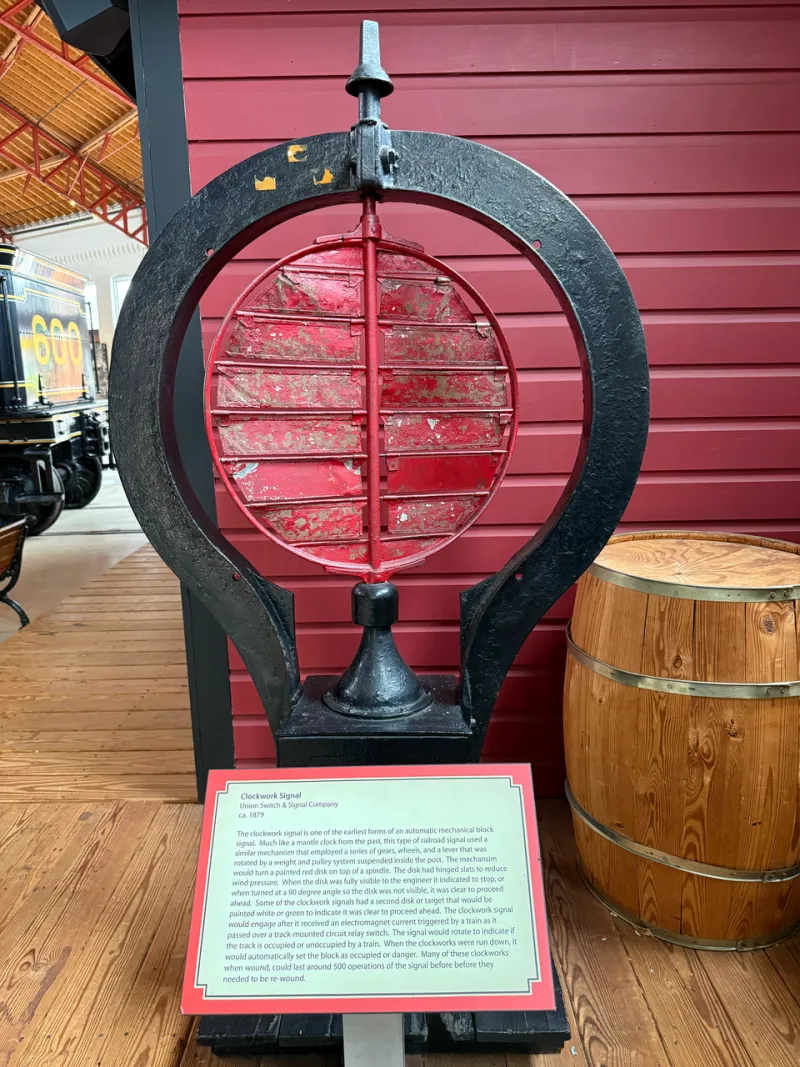
Photo: Peaceray, CC BY-SA 4.0, via Wikimedia Commons
On most nights across the American rail network, dispatchers in places like Fort Worth, Jacksonville, and Omaha watch thousands of miles of track through computer displays. Block sections render in green and red, train identifiers crawl across screen edges, and a single control desk can govern a subdivision longer than some states. Then, occasionally, a screen goes black. A fiber line is cut, a server cluster trips, a data center loses power. What happens next is not improvisation — it is the product of decades of fail-safe engineering, and for agencies and shippers evaluating signal contractors, understanding that engineering is essential.
The First Principle: Assume Failure
Every component in a North American signal system is designed around a single question: what happens when this stops working? The answer, codified in FRA rules and AREMA communications and signal standards, is that the system must fail into its most restrictive state. A broken rail circuit drops the block to red. A dark signal is treated as a stop indication. A loss of communication between a control point and the dispatcher's office does not free the territory — it constrains it.
This philosophy inverts the logic found in many other industries. Where a highway traffic system degrades gracefully into flashing yellow lights, a rail interlocking degrades into enforced separation. The design burden falls not on preventing every failure, which is impossible, but on guaranteeing that every failure lands in a known, safe condition.
Layers of Redundancy Behind the Desk
A dispatcher's display is the visible tip of a deep infrastructure stack. Beneath it sit redundant server pairs, often in geographically separated data centers, connected to field locations through diverse fiber routes and, in many corridors, leased circuits or microwave links as backup paths. Control points — the signal bungalows and relay cases scattered along the right-of-way — store their own interlocking logic locally.
That local storage matters. When the communication line between a control point and the dispatch center fails, the interlocking does not become a dumb collection of relays. It continues to enforce its configured routes, holding signals at danger unless a safe route has already been lined. Trains may be delayed, but they will not be endangered by the outage itself.
The economics here reward upfront investment. Redundant path diversity adds single-digit percentages to a signal construction budget; a single mainline derailment caused by an unprotected failure mode can erase that margin a thousandfold. Contractors who quote aggressively by thinning out communications redundancy are, in effect, transferring risk onto the railroad's balance sheet.
What the Field Does When the Desk Goes Quiet
Technology is only half the fail-safe story. When a dispatch system goes dark, railroad operating rules take over. Train dispatchers and train crews fall back on track warrants, bulletins, and forms — paper-based authorities that establish who owns which stretch of track. In dark territory, or when centralized traffic control is unavailable, movement authority is issued verbally and confirmed in writing, with crews copying and repeating instructions to eliminate transcription errors.
These protocols are rehearsed, not improvised. Railroads run periodic operating tests, and signal construction crews must plan their work around them. A contractor replacing a control point cannot simply take the territory offline; the outage must be scheduled, flagged, and coordinated with the operating department so that fallback procedures are active before the first wire is cut.
Construction Tolerances and the Safety Chain
The hardware underneath this logic demands a level of construction precision that surprises clients coming from highway or building backgrounds. Track circuits — the fundamental detection mechanism — depend on rail resistance, ballast conditions, and bonding within tight electrical tolerances. A poorly installed bond or a degraded insulated joint can cause a block to intermittently drop to red, producing what operators call 'false occupancy' and grinding throughput to a halt.
Conversely, the more dangerous failure is the intermittent loss of shunt: a wheelset failing to reliably detect on a circuit. Modern contracts therefore specify not just installation but documented testing — shunt tests with standardized equipment, insulation resistance measurements, and phasing verification — witnessed and signed off before any territory is turned over to live operation.
Interlocking logic itself is typically programmed in vital, safety-certified processors whose code is validated against fail-safe principles. Field wiring is verified against design schematics connection by connection, because a single crossed wire at a switch machine can defeat the logic that everything else depends on.
What Evaluators Should Ask For
Government and industrial clients weighing signal contractors should press on a few specifics. Request the failure-modes analysis for the proposed architecture: how does the system behave on loss of each communication path, each power feed, each vital processor? Ask for the testing plan in writing, including witness points the client can attend. Verify that communications path diversity is genuine — two fiber routes in the same conduit are not redundancy. And confirm that the contractor's cut-over plan includes documented fallback operating procedures, coordinated with the railroad, not assumed away.
A signal system earns its keep in the hours when nothing works as intended. The contractors worth hiring are the ones who design, build, and test for those hours first — and who can show you the paperwork proving it.