Building the Inland Port: What It Really Takes to Construct an Intermodal Terminal
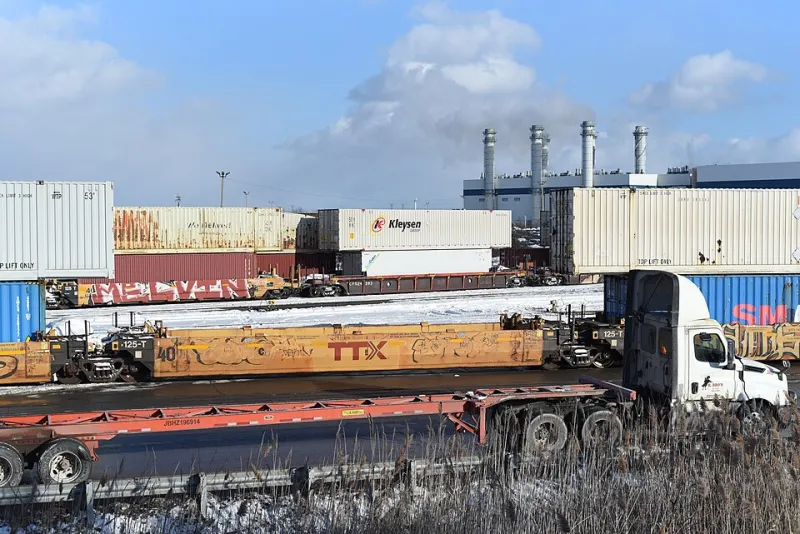
Photo: Milan Suvajac, CC BY-SA 4.0, via Wikimedia Commons
Ask most economic development officials what an intermodal terminal costs and you will hear a per-acre figure. Ask the contractors who build them and you will get a longer answer — one that begins with dirt and ends with a crane lifting a container off a double-stack car at two in the morning.
Intermodal terminals are the nodes that allow an inland distribution center in Columbus, Kansas City, or the Inland Empire to behave like a port city. But the distance between a greenfield site and the first revenue-producing lift is measured in a construction sequence that punishes improvisation. Understanding that sequence is the first step in deciding whether a terminal project near your region pencils out.
Earthwork Sets the Ceiling
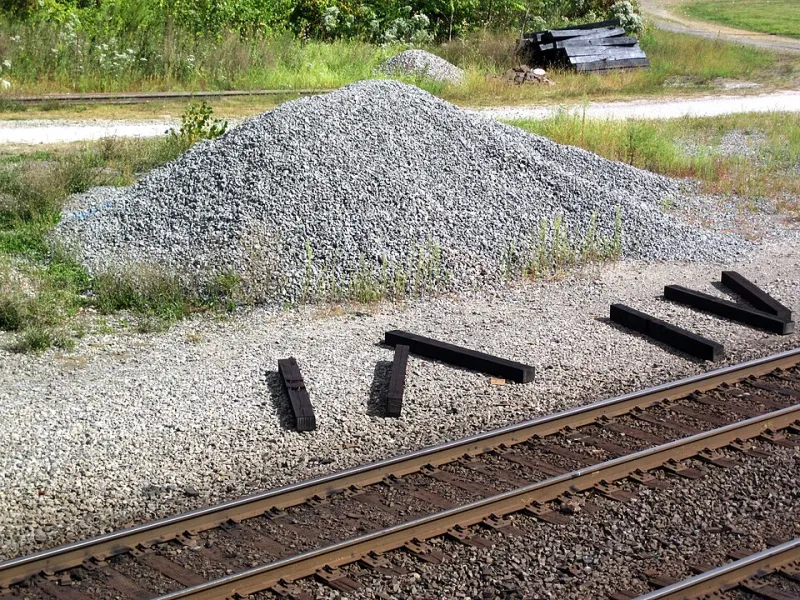
Every terminal begins with mass grading, and the volumes dwarf anything in commercial site work. A modern 300-acre facility may require moving several million cubic yards to establish the drainage profile and the tight vertical tolerances that track and pavement both demand.
The critical number is not the cut-and-fill balance itself — it is how close the design gets to zero. Every yard of import or export material is a truck movement, and on a rural site those haul distances compound quickly. Sites with favorable native soils and shallow groundwater earn back their grading investment for decades; sites with soft subgrade carry surcharge programs, wick drains, and staged fill schedules that can add a year before surfacing even begins.
Crane Rails and the Foundations Beneath Them
Rubber-tired gantry (RTG) cranes forgive imperfect pavement. Rail-mounted gantry (RMG) cranes do not. An RMG crane rail sits on a concrete or pile-supported beam whose settlement tolerance is measured in fractions of an inch over hundreds of feet — because a crane that cannot travel true cannot load a train.
That means deep foundations, often driven piles or drilled shafts, under the rail beams even when the surrounding yard sits on shallow footings. It is one of the least visible line items in a terminal budget and one of the least negotiable. Value-engineering the crane rail foundation is the classic false economy of terminal construction.
Pavement: The Part Everyone Underestimates
Container yards are, functionally, heavy industrial pavements designed for concentrated corner loads. Intermodal container chassis concentrate enormous weight on small tire footprints, and the pavement design must account for the actual traffic paths — the straddle carrier lanes, the RTG corridors, the truck aprons at the gates.
Concrete dominates the high-load areas, with asphalt in lighter-duty zones. The design life conversation matters here: a pavement section engineered for twenty years versus thirty is a modest upfront difference and an enormous mid-life disruption difference, because rehabilitating yard pavement while trains are arriving is exactly as painful as it sounds.
Track: The Clock That Everything Else Serves
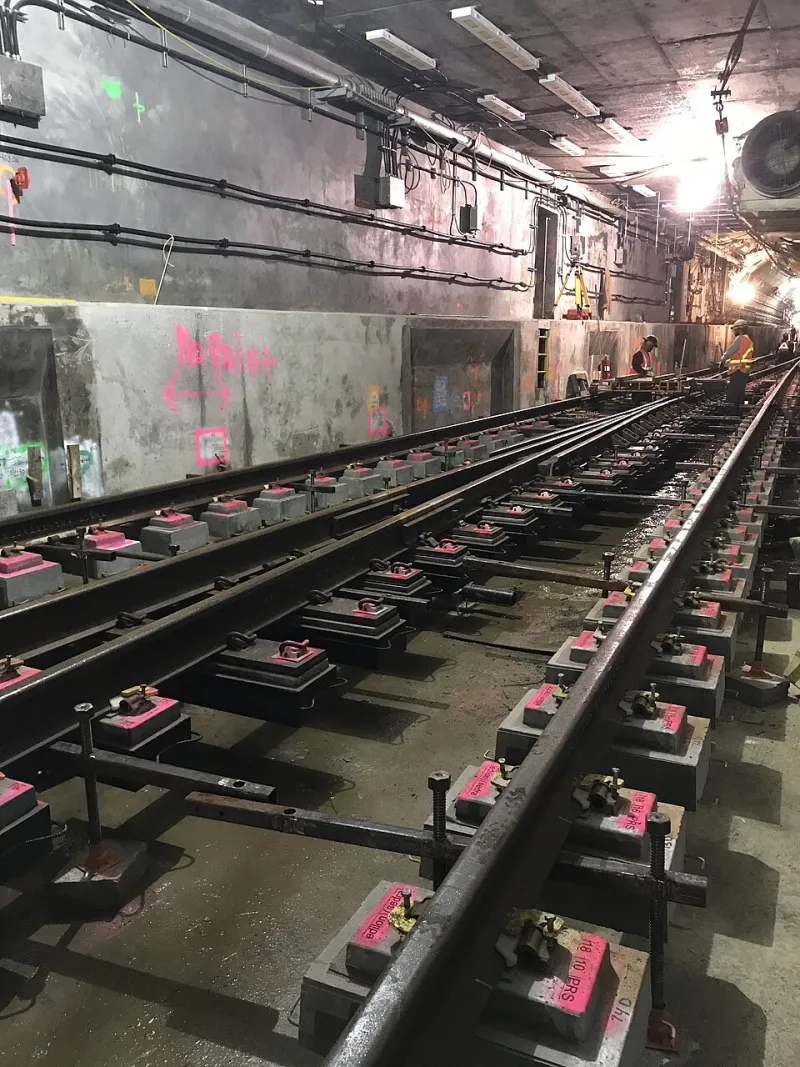
The rail component of a terminal — arrival and departure tracks, the loading tracks under the cranes, leads and ladder tracks — follows a logic of its own. Loading tracks must align with the crane rail system to the inch. Clearance envelopes govern everything nearby. And the connection to the host railroad's mainline is a negotiation with a Class I carrier's engineering standards, not just a construction task.
Sequencing is where rail expertise pays for itself. Track work that could have been installed before pavement gets installed after, and the yard spends months operating at reduced capacity while crews work around live freight. The best terminal contractors build the schedule around track availability windows the way a hospital build is built around surgical schedules.
Utilities, Drainage, and the Invisible Scope
Underneath it all: stormwater management for hundreds of impervious acres, high-mast lighting circuits, gate systems, fiber for the operating systems, and increasingly the electrical capacity for electrified handling equipment. Utility coordination is not glamorous, but a terminal that cannot pass an environmental review on its stormwater design does not break ground, no matter how good its rail economics look.
Does It Pencil? The Honest Framework
For a region evaluating a terminal proposal, the questions that matter are consistent:
- Drayage reach. A terminal earns its keep when it sits within an overnight truck radius of meaningful freight demand. Beyond that radius, the highway competes and wins.
- Railroad commitment. A terminal without a service commitment from the host carrier is a very expensive transload facility.
- Ground truth. Geotechnical risk is the single largest source of terminal cost overruns. The borings come before the renderings.
- Phasing discipline. Terminals that build full capacity upfront and wait for volume tie up capital; terminals that phase can match investment to demand.
When those elements align, the transformation is real. Inland terminals have rewritten the logistics maps of entire regions, converting cornfield-adjacent land into distribution infrastructure that commands port-adjacent economics.
But the conversion is earned in the construction sequence — in the grading plan, the pile schedule, the pavement joints, and the track windows. Regions that evaluate terminals by the rendering alone are buying the picture, not the project. The ground, as always, decides.